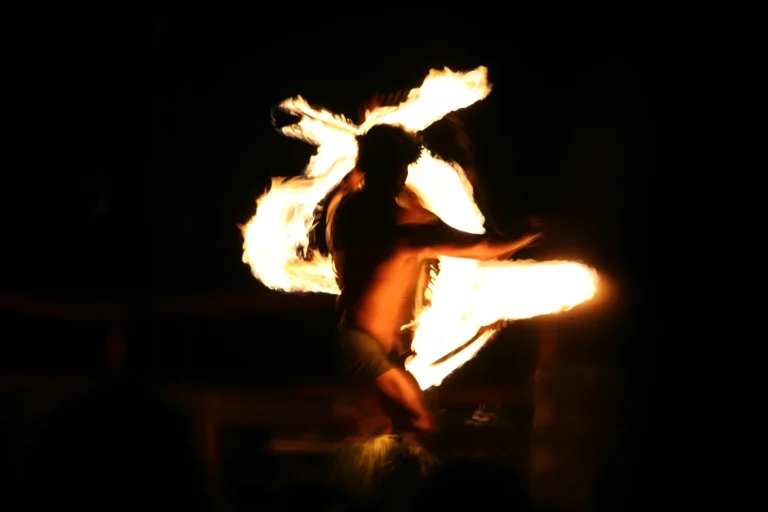
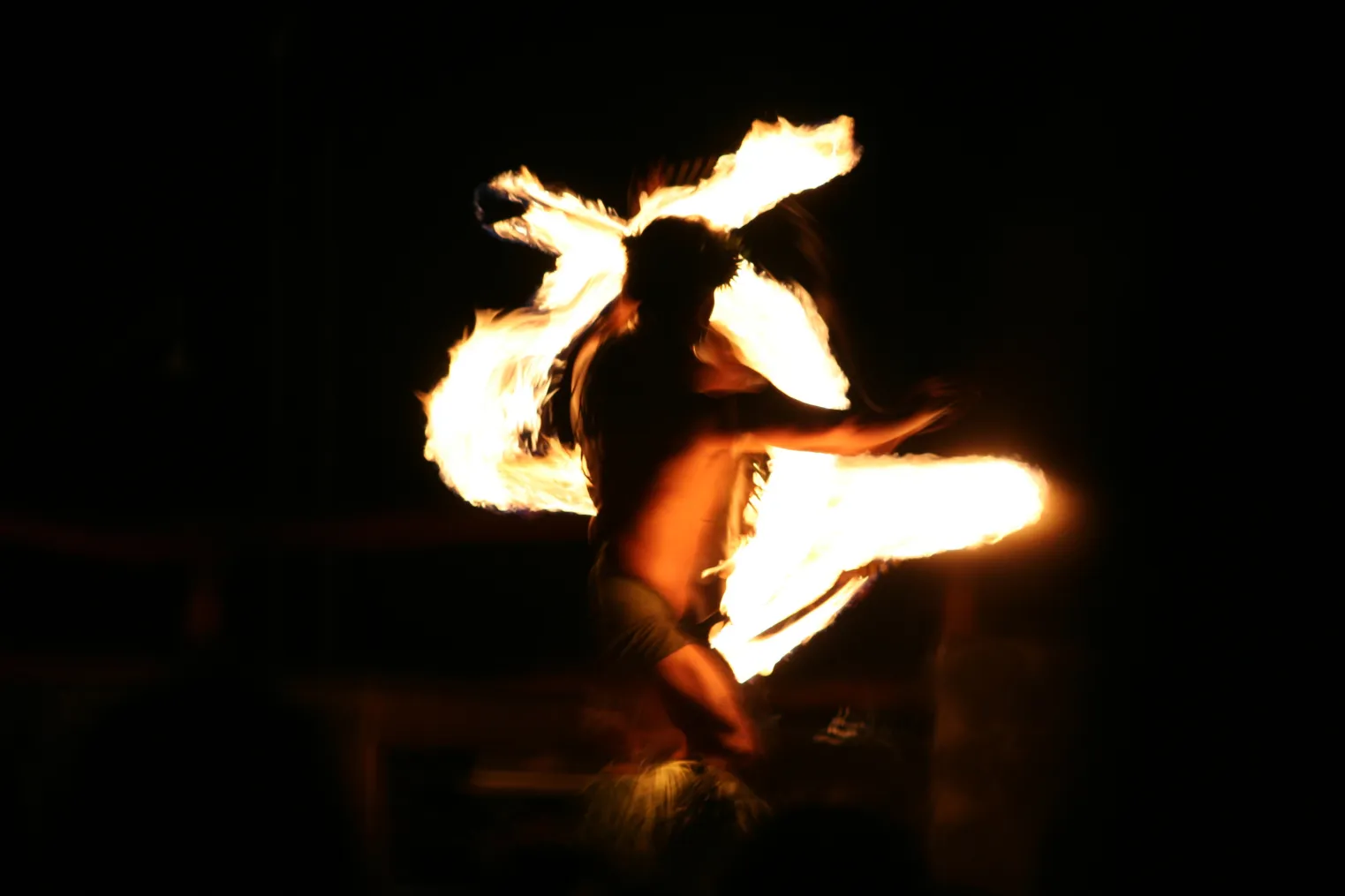
You don’t get many second chances when the drums start, the torches flare, and a dancer snaps through the dark. Luau light shifts fast, from warm stage glow to bright fire, so your camera settings need to stay calm while the show doesn’t. A fast lens, a steady shutter, and ISO you’re not afraid to raise can save the night. The trick is knowing which setting to trust first.
Key Takeaways
- Start around 1/320s, f/2.8–f/4, and ISO 3200–6400 to freeze dancers while keeping exposures bright in low light.
- Raise shutter to 1/500–1/800s for fire knives or fast spins, and drop to 1/125–1/160s only for intentional motion blur.
- Use spot or center-weighted metering on faces and flames, and dial in -0.3 to -0.67 EV to protect fire highlights.
- Lock white balance instead of Auto, usually 3200–4200K or slightly warm, and shoot RAW to preserve fire glow and skin tones.
- Use a 70–200mm f/2.8 or fast prime, review frames at 100%, and adjust quickly for changing stage light and movement.
Set a Reliable Luau Base Exposure
Start by locking in a base exposure that can handle the luau’s tricky mix of torchlight, stage spots, and deep black background. Set ISO 3200 to 6400, shutter speed at 1/250 to 1/320 second, and aperture around f/2.8 to f/4. That combo is one of the first, smartest moves you can make before the drums start and the fire knife spins. Meter for performers with spot or center-weighted metering so faces stay bright against the night. If the venue allows luau photography, this base exposure gives you a strong starting point for capturing fast performances without losing the mood of the show. Let the flames glow, then pull exposure down a third to one stop if highlights clip. Keep white balance warm, or lock 3200K to 4200K for steadier color. Shoot RAW. Check frames at 100 percent on the LCD and adjust fast. Keep shadows usable and fire highlights alive.
Choose a Fast Lens for Luau Photos
Reach for a fast lens before the conch shell sounds, because glass matters as much as your exposure when the stage goes dim and the torches flare. A 70–200mm f/2.8 gives you room to frame wide or tight, use telephoto compression, and keep performers crisp against smoky palms and torchlight. Shoot around f/2.8 to f/4 for strong aperture bokeh and more light. If your camera handles high ISO well, that combo works beautifully after sunset. Fast primes like an 85mm or 135mm f/1.8 also shine for portraits and tight dancer details. Look for sharp optics, dependable autofocus, and solid focus tracking so you can work handheld. Save image stabilization for slower environmental frames. For most luau action, wide apertures do the heavy lifting there. If you want cleaner sightlines for tighter shots, choosing best seats at Mauka Warriors Luau can make your fast lens even more effective.
Set Shutter Speed for Luau Dancers
To freeze fast hula steps and fire-knife spins, start around 1/250 to 1/320 sec so you keep the action crisp in the luau’s low light. If you’re handholding a 70–200mm f/2.8, 1/320 sec often gives you a smart balance between motion control and camera shake while the drums thump and dancers keep moving. You can slow to 1/125 to 1/160 sec for a little blur and mood, but check your shots up close and bump to 1/400 or 1/500 sec if the action still looks soft. Pair these settings with smart positioning from top photo spots so you can capture cleaner angles and better timing throughout the performance.
Freeze Fast Dance Moves
Lock in your shutter speed before the drums kick up and the dancers slice through the stage lights. You’ll get cleaner action if you start at 1/320s handheld, then test the first few performers for blur.
- Use 1/320s as your baseline for high energy freezes.
- Jump to 1/500s or even 1/800s for fire knives and whipping arms.
- With a 70–200mm f/2.8, stay wide open at f/2.8 to f/4 for gesture focused timing.
- If 1/320s still smears motion, move one stop faster, like 1/640s, and adjust ISO as needed while using dynamic framing techniques.
At Mauka Warriors Luau, the Fire Knife Dance makes those faster shutter speeds especially useful when the performance intensity spikes. That approach keeps tattoos, leis, and flashing smiles crisp instead of ghosted. Your camera should feel ready, not surprised. You’ll catch the stomp, the turn, and the sudden grin right on beat.
Still comparing Oahu Luau?
Ask for tour ideas, hotel suggestions, or a simple trip plan that combines both.
Trip Helper
Balance Motion And Light
Start by deciding whether you want crisp motion or a little sway in the frame. For fire dancers, use 1/320s or faster. Pair it with f/2.8 and ISO 6400 for ambient balancing under dim torches. For hula, try 1/125 to 1/160s. You’ll keep faces sharp while skirts show motion painting and directional emphasis. If flames streak too much, move toward 1/200s and check a zoomed preview. On phones, night photo settings can help stabilize exposure when stage light shifts quickly.
| Goal | Setting | Feeling |
|---|---|---|
| Fire frozen | 1/320s+ | Pulse |
| Hula flow | 1/125 to 1/160s | Breeze |
| Fire trails | 1/80 to 1/200s | Drama |
That small shutter shift changes everything. You hear drums, see sparks, and choose whether the night snaps or glows. At longer zooms, stay near 1/200s to 1/320s so dancers look clean, not smudged, even when the stage light turns moody.
Handheld Shutter Speed Tips
For most handheld luau performances, 1/320s is a strong place to begin because it freezes quick arm swings, torch spins, and those sudden flashes of fire without turning the whole scene mushy.
- Pair it with f/2.8 and ISO 6400 so your exposure stays usable.
- At 200mm, push to 1/500s or faster because camera stabilization can’t stop dancer motion.
- For fire trails, try 1/60s to 1/125s with a monopod, steady stance, or creative panning.
- Zoom to 100% between songs, check sharpness, watch noise, and mind flash sync limits.
When following video tips, focus on the most dynamic moments and skip filming sections that add little visual impact. You’ll hear drums thump and see sparks sketch bright loops, so adjust fast. If faces still smear, raise shutter speed. If the scene looks too dark, trust your sensor and bump ISO before sacrificing crisp handheld detail.
Set Aperture for Light and Sharpness
Open the aperture wide and let the stage come to you. On a 70 to 200mm lens, start around f/2.8 to f/4 when fire dancers rush forward and the drums hit. You’ll gather more light and separate faces from torches with strong subject isolation. That’s where aperture creativity, bokeh control, and even a watchful eye on focus breathing can shape a dramatic closeup. If you know your Mauka Warriors seating, you can choose an aperture based on how far your section sits from the stage. For wider choreography, stop down to f/4 or f/5.6 so more dancers stay crisp across the stage. Pair that choice with about 1/250 to 1/320 second when flames spin fast. Avoid f/8 to f/11 on a handheld telephoto. Those smaller openings can push shutter speed too low and invite blur. For groups, tighten one or two stops and keep motion clean.
Raise ISO for Dark Luau Stages
Once you’ve opened the lens as far as the scene allows, let ISO carry the rest of the load on a dark luau stage. You want shutter speed, not blur, so lean on lowlight techniques and smart iso experiments. A little grain beats smeared dancers every time, even when drums thump and torches hiss in salty night air. At Mauka Warriors Luau, expect nighttime conditions that make these higher ISO choices especially practical.
Open the lens, trust ISO, and protect shutter speed, grain is a fair trade for sharp dancers under torchlit night skies.
- On modern full-frame bodies, try ISO 3200 to 6400 for 1/250 to 1/400s.
- On APS-C or older cameras, stay near ISO 1600 to 3200 to tame grain.
- Review frames at 100% and use noise profiling to judge detail, skin texture, and flame edges.
- For cleaner marketing shots, choose the highest usable ISO, keep f/2.8 or wider, and adjust exposure with aperture or shutter before pushing higher.
Meter Luau Fire Dancers Correctly
When the torches start to spin, meter for the brightest flame and the dancers’ lit faces, not the dark stage around them. Use spot exposure or center-weighted metering to read the highlights, then protect them with highlight priority thinking. If you’re on evaluative metering, dial in minus one-third to two-thirds stop so the fire keeps texture. Pair that flame metering with a wide aperture around f/2.8-f/4, and a fast shutter near 1/250 to 1/500 second to freeze the spin. Let ISO rise as needed, even to 1600, 3200, or 6400, if your camera handles it well. Each time you switch from wide-stage views to tight shots, re-meter the brightest flame. Stages change fast, and fire loves to trick your camera at every turn tonight. Also, practice respectful photography by avoiding disruptive shooting behavior during cultural performances.
Keep White Balance Warm
You’ll get a truer luau mood when you keep white balance a little warm, because the fire’s glow and the stage lights should look golden, not scrubbed clean. If you let auto white balance chase neutral tones, it can flatten that amber warmth and make shifting stage color casts stand out in all the wrong ways. Set a warm Kelvin value or custom balance, and you’ll hold onto the skin tones, torchlight, and night air that make the whole scene feel alive. This matters even more at Mauka Warriors Luau, where a unique island performance can lose some of its atmosphere if your camera cools the scene too much.
Preserve Ambient Warmth
Because luau light glows with fire, lanterns, and warm house bulbs, keep your white balance on the warm side instead of letting Auto WB scrub out that amber mood. You want golden ambience, natural skin warmth, and lively fire reflections.
- Choose Cloudy around 6000 to 7000K, or Shade around 7000 to 8000K.
- If you shoot RAW, set WB 500 to 600K warmer than neutral.
- For mixed light, try 3200 to 4500K instead of harsh tungsten correction.
- Zoom to 100% and watch faces and flames. Lift exposure gently, not WB.
During the Imu Ceremony, preserving that warm color cast helps firelit scenes feel authentic rather than clinically corrected.
If blue spotlights sneak in, bracket white balance by a stop, or keep shooting RAW with a warmed preset. That way, you hold the island’s candlelit feel while preserving detail and avoiding highlight blowouts later on.
Stage Light Color Casts
Balance matters fast once the stage starts throwing blue washes across orange torchlight. Keep your white balance fixed around 3200–3800K instead of Auto WB, or the camera will scrub away that golden fire mood. Try a tungsten preset or nudge daylight up by 200 to 400K so skin stays natural under spotlights. If you shoot RAW, under-correct a touch in-camera and save richer warmth for color grading later. Mixed lighting needs quick ambient correction. Prioritize the fire as your main source, then refine cool blue patches with local edits. If you’re photographing guests enjoying included alcohol at Mauka Warriors Luau, a steady warm white balance helps preserve natural skin tones under mixed evening lighting. For high-ISO action, consistent warm WB keeps noise calmer and makes gels troubleshooting, easier when dancers flash past drums, leis, and grinning tourists. You’ll keep highlights intact and the whole beach stage feels honestly moonlit.
Fix Blur and Noise in Luau Photos
Start by freezing the action, not fighting it after the fact. To beat motion blur at a luau, set at least 1/320s, open your lens to f/2.8, and raise ISO until the dancers and fire stay crisp. Don’t fear ISO 6,400 if your camera handles it well. Modern sensors often keep noise low enough for clean files and easier noise reduction later.
- Hold a steady stance, or use image stabilization if you’ve got it.
- Shoot bursts so one frame catches the drumbeat, sparks, and sharp eyes.
- Keep the warm white balance from firelight. It flatters skin and hides color speckling.
- Use light sharpening techniques in editing, not heavy rescue work. Let the flame glow, and keep the scene natural through the smoky night air gently.
If you’re photographing the meal as well, ask whether seconds at Mauka Warriors Luau are available so you can anticipate extra table movement and candid reactions.
Frequently Asked Questions
Should I Use Flash During a Luau Performance?
Usually, you shouldn’t use flash? during a luau performance; you’ll respect performers and preserve atmosphere by relying on fast lenses, high ISO, and stage light. If permitted, use minimal, diffused flash only for static shots.
Is RAW Better Than JPEG for Luau Photography?
Yes, like night and fire, RAW vs JPEG matters: you’ll get Dynamic Range, cleaner high-ISO shadows, and flexible white balance. If you’re short on time, shoot RAW+JPEG to balance quality with your Post processing Workflow.
Where Should I Sit for the Best Luau Photos?
Choose Front row center for balanced performer shots, Stage adjacent aisle for dramatic fire close-ups, or an Elevated balcony for wide scene coverage. You’ll avoid obstructions, keep steadier footing, and preserve warmer light in photos.
Can I Photograph a Luau With a Smartphone?
Yes, you can; your smartphone becomes a paintbrush in the night. Use smartphone lowlight, lock manual exposure, and try wide angle composition. You’ll capture dancers if you brace your phone, avoid zoom, and shoot bursts.
How Do I Protect My Camera From Beach Sand and Humidity?
Protect your camera by using Weather sealing, keeping it in a sandproof bag, avoiding lens changes, adding Lens hoods and filters, wiping off spray, and storing gear with Silica packets so humidity doesn’t cause fungus.
Conclusion
With the right settings, you won’t just photograph a luau. You’ll catch the whole night breathing. Set your shutter fast, open the lens wide, and let ISO do the heavy lifting when the stage turns cave-dark. Keep white balance warm so skin glows and torches stay gold, not ghostly blue. Then watch the details land: flying skirts, drumbeat blur, fire carving the air. A little prep turns chaos into something almost mythic.