If you hear “warrior luau” and picture nonstop battle, Oahu will surprise you. Here, “warrior” usually means courage, lineage, training, and the skill to protect a community, not just swing a spear. You’ll see drums, chants, tapa patterns, sharp footwork, and fire used like storytelling tools, with enough smoke and torchlight to keep things dramatic but still family-friendly. The real question is how one show turns all that into a clear island story.
Key Takeaways
- “Warrior” is the show’s unifying story, representing courage, discipline, ancestry, and rites of passage across seven Polynesian island traditions.
- The theme is theatrical, not violent, using drums, chants, weapons, lighting, and athletic choreography to symbolize bravery and cultural identity.
- Each island segment presents a distinct warrior expression, including Hawaiian oli, Samoan slap rhythms, Tahitian speed, and Māori stamping intensity.
- Costumes, tapa patterns, barkcloth, feathered regalia, and controlled weapon demonstrations visually reinforce each culture’s version of warrior strength.
- The fire-making finale crowns the narrative, turning survival skill and ritual power into a symbol of transformation, leadership, and communal strength.
What Does “Warrior” Mean at a Luau?
Pageantry sets the tone here: when this Oahu luau says “warrior,” it doesn’t mean a literal battle scene. You’re seeing a theme that pulls together heroic myths and martial traditions from seven Polynesian cultures, including Hawaii, Samoa, Tahiti, Tonga, Fiji, the Cook Islands, and New Zealand. The warrior idea gives the night a clear story and a quick visual language.
You notice it in the spear and club shapes, tapa-patterned garments, painted skin, pounding drums, and haka-like chants. Choreography turns courage, skill, and rites of passage into movement you can follow from your seat. Families get a big, bright spectacle, not a history lecture. At Mauka Warriors, this theme also connects to Polynesian warrior history to give the performances a deeper cultural frame. The fire-making finale seals it with heat, rhythm, and a little wow that feels vivid, shared, and surprisingly easy to grasp.
Why Isn’t a Warrior Luau Violent?
Watch the stage closely and you’ll see that a warrior luau trades real violence for crafted drama. At places like Mauka Warriors, you watch storytelling, dance, costume, and ritual skill take center stage. Spear throws and weapon displays look fierce, but trained performers run them as controlled demonstrations, not actual fights. Choreography shapes the action through sharp lines, synchronized movement, drums, lighting, and bursts of fire. You feel bravery without seeing harm. That balance matters because the Polynesian Cultural frame presents warriors as protectors, leaders, and makers of skill. Even the fire-making finale aims to awe, not injure. At Mauka Warriors, the Fire Knife Dance adds another layer of intensity through expert performance that emphasizes spectacle and tradition over danger. Safety protocols and theatrical staging keep every intense moment thrilling, humane, and surprisingly family-friendly for curious travelers on Oahu after dinner and sunset settles in.
Which Polynesian Cultures Are Featured?
At Mauka Warriors Luau, you’ll see seven island traditions take the stage: Cook Islands, Samoa, Tonga, Fiji, Hawaii, Tahiti, and New Zealand. You can spot the warrior thread in the pounding drums, haka-style challenges, strong tattooed imagery, and sharp group movements that give the night its pulse. Just when you think you’ve found one rhythm, the show shifts to hula, chant, and imu-rooted Hawaiian touches, then snaps back into fast Tahitian and Cook Islands beats. The experience is designed as an Insider Guide to the Mauka Warriors Luau, helping guests know what to expect from its warrior-themed performances.
Seven Island Traditions
Think of it as a moving map of Polynesia, with seven island traditions unfolding one after another through dance, music, and costume. At Mauka Warriors Luau, you watch Hawaii, Samoa, Tahiti, Tonga, Fiji, the Cook Islands, and Māori New Zealand take the stage with distinct sounds and textures. This unique island performance sets itself apart by framing each culture through a warrior-centered storytelling style.
- Samoa brings slap rhythms, weapon displays, and sharp stances.
- Māori groups stamp hard and move tight, shoulder to shoulder.
- Tahiti and the Cook Islands flash quick hips and bright tapa looks.
- Tonga and Fiji lean grounded, heavy, and drum-rich.
- Hawaii layers oli, hula, and canoe-carving motifs into story.
You don’t just see costumes. You hear skin drums, chants, and footbeats. You feel how each island keeps its own pulse, even in one shared night for you.
Still comparing Oahu Luau?
Ask for tour ideas, hotel suggestions, or a simple trip plan that combines both.
Trip Helper
Warrior Theme Connection
What ties those seven island traditions together is the luau’s warrior thread, which gives the whole night a sharper edge. You see it first in Samoa, where warrior rituals and Siva Tau-style chants land with heavy drumming, wide stances, and weapon flashes.
Then the mood shifts without breaking theme. Tonga and Fiji bring athletic choreography, fire, and weapon handling that nod to fighting traditions. Hawaii answers with chants, hula, and kapa-inspired costumes linked to chiefs and warrior genealogy, then builds toward the imu fire-making finale. The Cook Islands and Tahiti add fast hips, bright skirts, and rapid drumming in tamure and otea styles. You get contrast, not confusion. Even New Zealand fits the lineup, adding force and focus that keep the warrior idea grounded. At Mauka Warriors Luau, this warrior-focused approach shapes the entire celebration into an authentic island experience on Oahu.
How Mauka Warriors Luau Tells the Story
Because Mauka Warriors Luau builds its show around a single warrior theme, you can follow the story even when nobody stops to explain it. This Luau Show moves through seven island cultures, using motion, sound, and staging to keep you oriented. You read the action almost instantly.
- Each segment feels like a new version of warrior energy, not a random lineup.
- Lighting and flashing effects sharpen combat-like moments, so your eyes track speed, strength, and timing.
- Pre-show hula lessons and weapon photo stops give you real touchpoints before the theatrical sweep.
- Athletic jumps and synchronized lines do the explaining, handy if your brain is still on vacation.
- Near the end, the fire-making finale becomes the peak, showing warrior spirit through heat, risk, and focus.
That through-line also helps you understand what’s included at Mauka Warriors Luau without needing constant narration.
What Do the Chants and Costumes Mean?
As the chants rise, you start to hear that the warrior theme isn’t just about fighting. In a warrior-themed luau, the voices mix Hawaiian mele with pan-Polynesian cries that call on ancestors, the ʻāina, and the strength to protect. You’re hearing identity, duty, and memory set to rhythm.
Then your eyes catch the costumes. Tapa patterns, feathered headpieces, siapo, and barkcloth motifs point to Hawaii, Samoa, Tonga, Fiji, Tahiti, the Cook Islands, and New Zealand. The most ornate regalia often marks the front-row Moi Royal performers, while simpler matching looks keep the stage clear and believable. Even the changes in cloth, jewelry, and adornments help tell the evening’s arc, from invitation to challenge to skill to the final spark of fire for everyone. Since many guests want to remember those visual details, it helps to know the venue’s photography tips before the show begins.
Why Are Weapon Demonstrations Included?
Those striking weapon displays show you another layer of the warrior theme. You aren’t watching random combat. You’re seeing a cultural experience that recreates how Samoa, Tonga, Hawaii, and other Polynesian societies trained to defend people, lead, and signal rank. The movement looks fierce, but the meaning stays grounded in history, craft, and discipline. Across seven cultures, these scenes connect warrior training to community duty, while stylized moves and strict safety rules keep the spectacle thrilling for kids, parents, and first timers alike. At the Grand Finale, those themes build from the luau’s welcome into a closing moment that feels earned rather than random.
- Clubs, spears, and knives reveal skill, not gore.
- Choreography lets you follow timing after the show started.
- Performers train hard, so the action stays safe.
- Stories tie battle skills to migration and protection.
- Alerts about lights and fire help families plan.
What Does the Fire-Making Finale Symbolize?
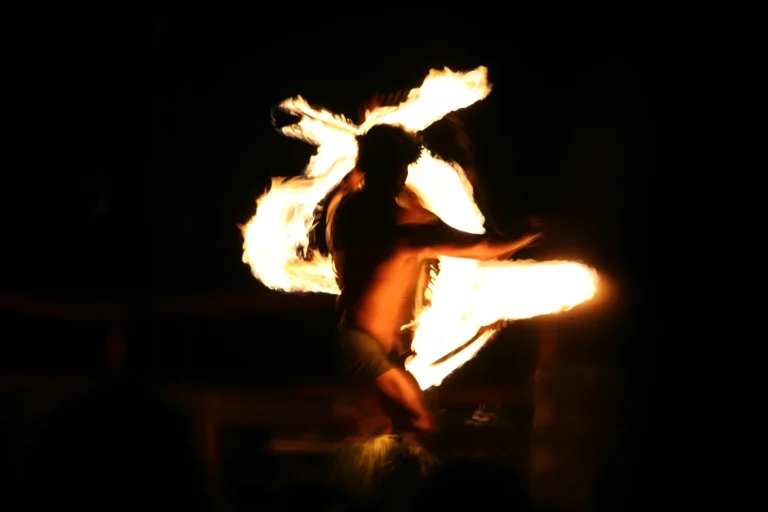
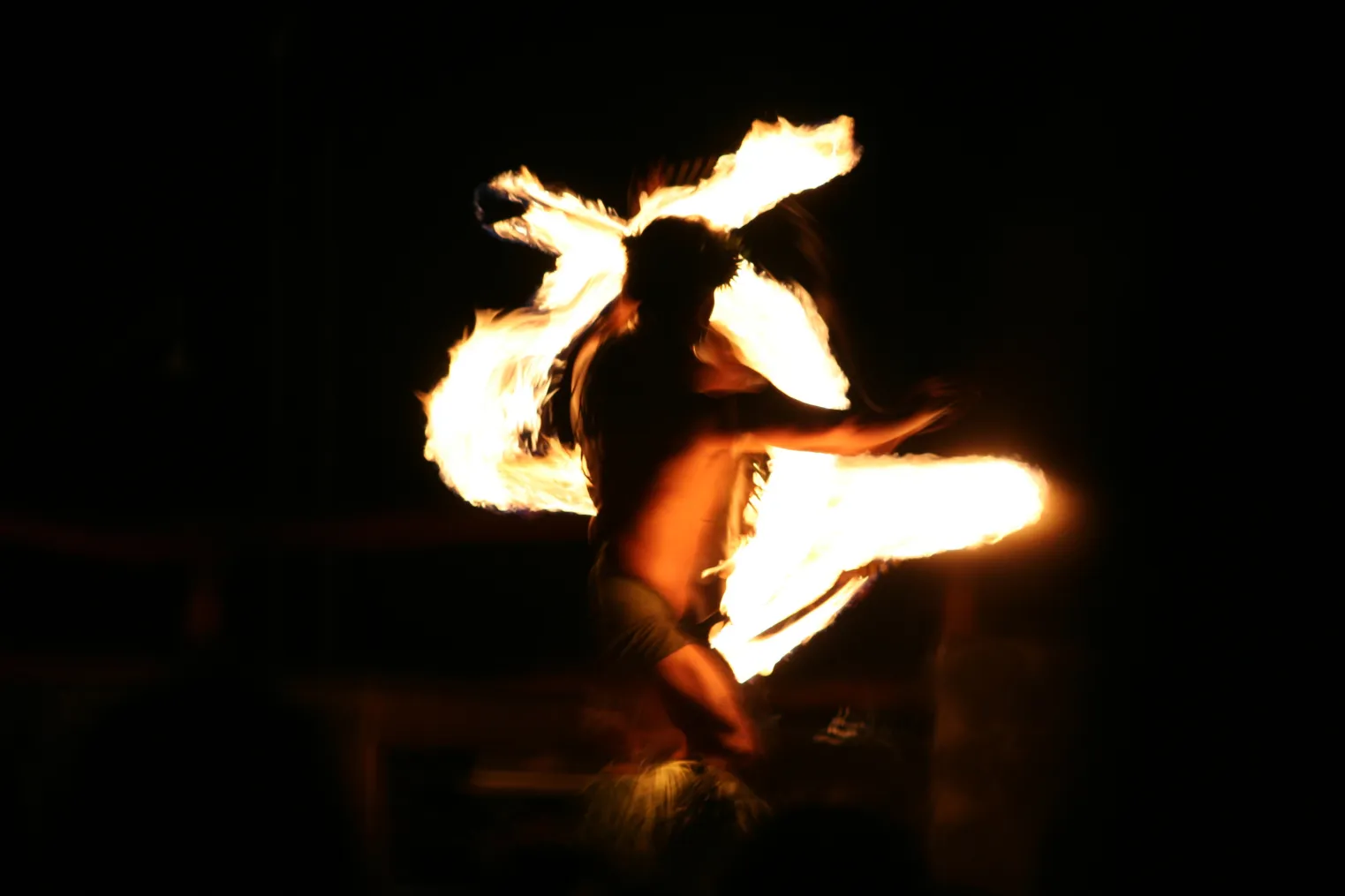
As you watch sparks catch and wood flare to life, you see more than a flashy ending. The fire-making finale shows you warrior skill and survival in action, turning raw materials into heat, light, and power with a crackle you can feel in your chest. At Mauka Warriors Luau, the Imu Ceremony adds deeper cultural meaning by connecting fire to traditional Hawaiian cooking and preparation. It also frames fire as ritual power, so by the time the last flames rise, you can sense courage, rebirth, and a shared strength pulling the whole luau together.
Warrior Skill And Survival
Watch the finale closely and you’ll see more than a flashy burst of flame. In the fire-making finale, you’re watching survival knowledge in action. You can almost hear the scrape of wood, see sparks catch, and feel why dependable hands mattered every single night. Warriors had to make fire with friction tools like a fire plough or bow drill. That meant warmth, cooked food, and a way to signal across islands. The staged glow also hints at night watch duty, when warriors guarded homes after dark. Oʻahu’s history also included conflicts like the Battle of Kipapa, where readiness, endurance, and survival skills could mean the difference between safety and loss.
- You see skill, not just spectacle
- You notice tools that turn wood, smoke, and patience into heat
- You connect flame with cooking, warmth, and signals
- You picture warriors scanning shorelines at night
- You leave knowing strength included resourcefulness
Fire As Ritual Power
Reverence rises with the flames in this finale, because the fire doesn’t just look impressive. You’re watching a pan-Polynesian sign of ancestral mana, leadership, and control over nature. In the fire-making finale, wood, breath, and tools become light, heat, and a test of readiness. If you want to capture the finale well, use camera settings that handle low light and fast motion during luau performances.
| Element | What you see | What it means |
|---|---|---|
| Spark | Friction, breath, smoke | Skill, provision, protection |
| Flame | Drums, daring spins, bright heat | Renewal, triumph, communal respect |
As drums tighten and lighting drops, you feel the danger on your skin. The sequence crowns the warrior story. It shows courage with real flame and precise timing. No wonder the crowd goes quiet before it cheers. You also see transformation, as raw materials turn sacred and practical in seconds before your eyes for the community.
How Cultural Is Mauka Warriors Luau?
While Mauka Warriors Luau draws from real Polynesian traditions, it doesn’t aim to be a purely Hawaiian cultural in-depth exploration. You get a cultural experience shaped as a polished pan-Polynesian show, with dances, costumes, and stories from seven island cultures. The staging feels theatrical, the drumming hits hard, and the fire finale goes big. Pre-show stations let you try hula, weave coconut headbands, and see island crafts up close. The evening itinerary follows a step-by-step night plan that helps set expectations for how the experience unfolds.
- Seven cultures share the spotlight
- Showmanship leads the pacing
- Activities offer quick cultural touchpoints
- Buffet balances tradition and crowd appeal
- You should expect spectacle over deep immersion
Food mixes kalua pork, poi, and lomi lomi salmon with buffet standards, so authenticity shares space with convenience too. Premium tickets usually mean fresher plates and shorter lines.
Is Mauka Warriors Luau Good for Kids?
That big-show energy also makes Mauka Warriors Luau a strong pick for families, especially if your kids like movement, noise, and a little pageantry. You’ll find kid-friendly pre-show activities that keep small hands busy and curious minds engaged.
Older kids and teens usually lock onto the warrior theme fast. The dances move hard and fast. Costumes flash with color. The fire-making finale often gets the biggest wide-eyed reaction of the night. Reviews often describe it as a family-friendly luau that works well for a wide age range. If you’re going with little ones, think through timing. You’ll have some waiting between dinner and the show, plus an intermission, and the full visit runs about three and a half hours. Alii seating can make family logistics easier with shorter buffet lines. Just note the flashing lights, loud music, and fire effects if your child startles easily.
What Happens Before the Show?
If you arrive close to opening, the pre-show hour feels less like waiting and more like a small festival you can wander through.
Arrive near opening, and the pre-show hour feels less like a line and more like a little festival to explore.
- Check-in opens at 4:45 PM, grounds at 5:00, and you can move straight into cultural stations before dinner.
- You can weave a coconut frond headband, make a flower bracelet, join a hula lesson, or watch coconut meat get shaved.
- Near the entrance, tattoo artists take last-minute names, and those spots disappear fast.
- The welcome drink bar often backs up, so your ticket might work better first on shave ice for kids.
- If you hold Alii or Moi tickets, you’re dismissed earlier to the buffet, which usually means fresher plates for your table with less time spent standing around hungry in line.
Following the arrival guide can make that first hour feel smoother, especially if you want time for activities before dinner.
When Does Mauka Warriors Luau Start?
Usually, Mauka Warriors Luau starts in stages rather than all at once. Check-in opens at 4:45 PM, and you can enter at 5:00 PM when the grounds come alive with cultural stations, music, and that first whiff of dinner in the air. If you want the night to feel complete, arrive by 5:00 PM, not after the show started. This staged schedule helps answer the common question about what time Mauka Warriors Luau starts.
| Time | What happens | Why it matters |
|---|---|---|
| 4:45 PM | Check-in opens | You get settled |
| 5:00 PM | Grounds open | You catch activities |
| After 5:00 | Dinner begins | Timing can vary |
| About 7:00 PM | Evening show starts | Main performance begins |
The full evening usually wraps around 8:20 or 8:30 PM, with an intermission. It runs Sunday, Tuesday, Wednesday, Thursday, and Friday, so check your date before you start dreaming.
What to Know Before Booking Mauka Warriors Luau
Before you book Mauka Warriors Luau, you’ll want a clear read on ticket tiers, arrival plans, and how the night flows from buffet to final fire. If the warrior theme is your main draw, better seats can give you stronger sightlines and earlier food access so you won’t miss the buildup. Mauka Warriors Luau offers different ticket tiers with varying prices and perks, so it helps to compare packages before you choose. You should also know the show runs about an hour with an intermission, and the flashing lights, booming music, and close-up fire effects are thrilling but not exactly whisper-quiet.
Ticket Tiers Explained
Which ticket tier makes the most sense at Mauka Warriors Luau? If you want the sweet spot, book Alii Premium. You’ll sit closer than Koa Classic, get two drink tickets, and reach the buffet earlier than standard guests. That early dismissal often means shorter lines and hotter food. If you want the smoothest night, Moi Royal adds front-row seats, three drink tickets, a welcome drink, skip-the-line bar access, and a premium souvenir for about $30 more. The seating sections differ mainly by how close each tier sits to the stage, which can shape the overall feel of the evening.
- Koa Classic works if price matters most.
- Alii Premium is the minimum upgrade worth making.
- Moi Royal fits guests who hate waiting.
- Book 3 to 6 weeks ahead for better seat choices.
- Infants under 5 are free, and cancellations need 24 hours for full refund eligibility.
Arrival And Transportation
Since Mauka Warriors Luau sits in Kapolei at 91-1780 Midway St, about 25 miles from Waikiki, getting there takes more planning than the map first suggests. If you drive, leave Waikiki by about 3:15 PM on weekdays because late-afternoon traffic can stretch the trip to 60 to 90 minutes. Google Maps often looks optimistic, so trust the road, not the screen. The venue’s free parking lot makes driving the easiest option, and the lot is usually painless to use. Parking tips can make arrival even smoother if you want to avoid last-minute stress. If you skip the wheel, rideshares work but surge pricing can sting. The Mauka Warriors shuttle gives you round-trip service from Waikiki or Pier 2 for $30 per person. Show-only tickets don’t include that ride, though you can buy return service later for $15 each.
Timing, Food, And Show
If you want the night to feel smooth instead of rushed, plan on being at Mauka Warriors from about 5:00 to 8:30 PM.
- Check-in starts at 4:45, and cultural activities fill the grounds before dinner.
- You’ll find buffet staples like kalua pork, poi, lomi lomi salmon, steamed fish, haupia, plus noodles and tofu garlic fried rice.
- Alii and Moi tickets reach the buffet earlier, so you get shorter lines and fresher plates. Moi adds skip-the-line bar perks.
- After dinner, expect a quiet stretch before the hour-long show and intermission, so kids may need a small distraction.
- Stay through the finale if you want the warrior arc to land. The fire-making demonstration near the end brings heat, sparks, and the night’s clearest sense of purpose.
In total, the Mauka Warriors Luau experience typically runs about three and a half hours from check-in to finale.
Is Mauka Warriors Luau Worth It?
How much is Mauka Warriors Luau really worth on Oahu? If you care most about the show, yes, it usually is. Reviewers often rank it second on Oahu after Toa, and you can see why. Seven Polynesian cultures move through a clear warrior story, then the fire-making finale snaps the night wide awake. Kids stay engaged with hands-on activities, while teens tend to love the fierce warrior scenes and flames. Many guests asking is it worth it come away feeling the strong production value justifies the price. Book Alii Premium or Moi Royal seats if you can. Better sightlines and easier buffet access matter, especially if you’re balancing dinner, grilled pineapple, and a little downtime before the seven to eight twenty performance. Arrive early and give yourself three to three and a half hours so the whole evening feels smooth, not rushed.
Frequently Asked Questions
Are Vegetarian or Allergy-Friendly Dinner Options Available at the Luau?
Yes, you’ll find limited vegetarian accommodations at the luau: garlic fried rice with tofu, purple potato, grilled pineapple, macaroni salad, and haupia. If you’ve got allergies or needs, contact them before booking and bring backups.
Is Transportation Provided From Waikiki Hotels to Mauka Warriors Luau?
Yes, you can book a round-trip Mauka Warriors shuttle from Waikiki’s Pier 2 for $30 per person. Shuttle availability is separate from show tickets, so confirm pickup details when reserving. You can rideshare or drive free.
Can Guests Take Photos or Videos During Performances?
Yes, you can take photos and videos during performances, but practice Camera etiquette: keep flash off, respect any restricted moments, record short clips, and use intermission for candid shots since low light can blur footage.
Are Premium Seating or VIP Packages Offered?
Yes, you can choose premium seating and VIP Packages: Alii Premium gives you mid-section seats, two drinks, and a souvenir, while Moi Royal adds front-row seating, three drinks, a welcome drink, and skip-the-line bar access.
What Happens if It Rains on the Day of the Luau?
Even if dark clouds roll in, you’re still on, Rain contingency keeps pre-show activities and the performance running, though severe weather can delay things. You should arrive early, expect lines, and watch check-in for updates.
Conclusion
By the end of the night, you see that “warrior” here means heart, heritage, and skill, not a clash of spears. You hear drums roll, watch fire flare, and notice tapa textures and sharp chants pull the story together. If you want a luau with clear storytelling and a family friendly pace, this one checks all the boxes. Arrive early for the hands-on activities, bring your curiosity, and let Oahu’s stage do the talking tonight.